Entry · Ref X_HKAOPI
How a Pizza Restaurant Encourages Community Connections
- Posted
- 2026-11-10
- Last amended
- 2026-11-10
- Account
- @waylonvjhk733
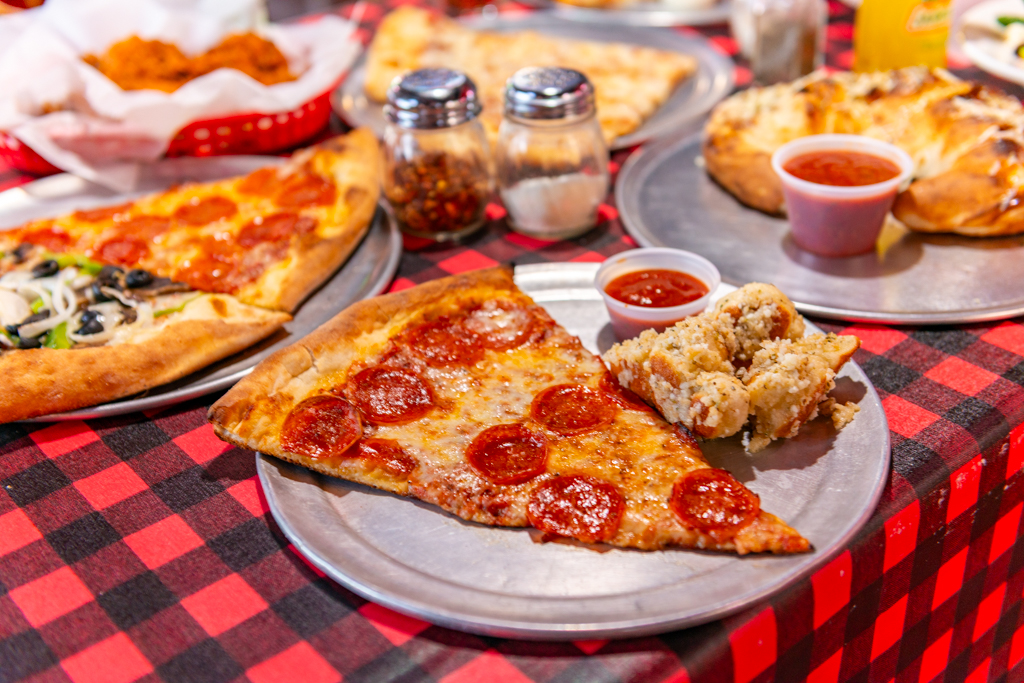

A good pizza restaurant does more than feed people. It gives them a place to land.
That may sound simple, but anyone who has spent real time in hospitality knows how rare it is to create a room that people trust with their routines, celebrations, awkward first meetings, and ordinary Tuesday nights. Restaurants come and go for many reasons, but the ones that become part of a neighborhood usually understand something deeper than menu engineering. They understand social gravity. They know how to make people feel welcome without making a show of it.
Pizza has always held a special advantage here. It is informal, shareable, familiar, and forgiving. Few foods move as easily between occasions. One table may be celebrating a Little League win, another may be hosting a low-pressure business conversation, and another may be a grandparent introducing a child to the pleasure of folding a hot slice without losing the toppings. A pizza restaurant can serve all three at once, and when it does that well, it becomes more than a place to eat. It becomes a small civic space.
Why pizza creates a different kind of gathering place
Not every restaurant format is built for connection. Fine dining can feel too ceremonial for casual interaction. Quick service chains often optimize for speed at the expense of lingering. Bars can be social, but they also exclude families and many people who simply do not want alcohol to anchor the experience.
Pizza sits in a different category. It lowers pressure. A whole pie lands in the center of the table and immediately changes the mood. People reach, negotiate, laugh, offer the last slice, and compare preferences. That may seem minor, but shared food drives shared behavior. Individual entrées keep attention fixed on personal plates. Pizza pulls people into a common moment.
There is also a practical dimension. Pizza is one of the few menu items that scales comfortably from one diner to a group of ten. It can fit a solo lunch, a youth team dinner, a fundraiser, a college study session, or a family with three children and three separate topping opinions. The flexibility matters because community life is not neatly segmented. A neighborhood spot has to handle unpredictability without making guests feel like a logistical problem.
Price point matters too. Community connection depends on repeat visits, and repeat visits depend on affordability. Most people cannot build a habit around special-occasion spending. A pizza restaurant often can offer a meal that feels generous without requiring financial planning. That opens the door to regulars, and regulars are the foundation of any neighborhood institution.
The room itself teaches people how to relate
Operators sometimes overestimate the power of brand messaging and underestimate the power of the physical room. Long before a guest reads a value statement on a wall, they are decoding the space. They notice whether the tables can be joined for larger groups. They notice whether the lighting flatters conversation or rushes people out. They notice whether the music competes with older relatives, toddlers, and anyone with hearing difficulty.
I have seen modest dining rooms outperform trendier spaces simply because they were designed around human behavior rather than aesthetics alone. A few inches between tables can determine whether strangers feel comfortable or crowded. A visible open kitchen can soften wait times because guests feel engaged rather than ignored. A counter where staff greet people by name can do more for local loyalty than a large marketing budget.
The best pizza restaurant layouts also account for mixed-use traffic. There will often be dine-in guests, takeout customers, delivery drivers, and families arriving in waves after school or sports practices. When these groups collide at the entrance, stress rises quickly. When the flow is clear, the room feels calmer, and calm is contagious. People stay longer, converse more, and associate the place with ease.
Seating variety helps. Booths work for families and privacy. Larger communal tables can support team gatherings or neighborhood groups. Window seats allow solo guests to feel included without feeling exposed. A well-run room quietly accommodates different social needs, which is exactly what a real community requires.
Staff shape the social temperature
Hospitality professionals know that community is not built by slogans. It is built by repeated human interactions that feel sincere.
A veteran server who remembers that a regular likes extra chili flakes, a host who notices when an elderly guest needs a quieter table, a manager who checks in after a local school fundraiser, these are not dramatic gestures. They are the daily work of recognition. Recognition is the first step toward belonging.
At a strong pizza restaurant, staff often serve as social bridges. They introduce new guests to house traditions, mention upcoming local events, and connect familiar faces across visits. Sometimes they do this deliberately. More often, it happens naturally because the room attracts repeat customers who begin to overlap. Staff become custodians of continuity. They remember who moved into the neighborhood, whose daughter left for college, and which youth team comes in after home games.
There is a delicate balance here. Familiarity should never tip into intrusion. Some guests want warmth; others want a quiet meal. Skilled front-of-house teams read this instantly. They know when to linger and when to step back. That judgment, more than scripted friendliness, creates trust.
Retention also matters. When a restaurant keeps staff over time, guests experience continuity. Faces become familiar, service becomes more intuitive, and the place gains emotional texture. Frequent turnover breaks that thread. People feel the difference immediately, even if they cannot articulate it. In community terms, consistency is not a luxury. It is infrastructure.
Local sourcing and local identity are not the same thing
Many restaurants talk about being local, but community connection runs deeper than buying a few ingredients nearby. Sourcing can help, especially when it supports regional farms, bakeries, brewers, or produce suppliers. Guests appreciate knowing that a business circulates money through the local economy. Still, local identity is broader. It is about whether the restaurant reflects the habits, rhythms, and stories of its area.
A suburban family-heavy neighborhood may need large tables, early dinner specials, and quick service before evening activities. A downtown district may care more about late hours, slice service, and easy stop-ins before events. A college town may reward experimentation, while an older residential area may value consistency over novelty. The restaurants that endure usually know which kind of place they are serving.
This is where many operators misjudge the market. They import a concept that worked elsewhere and assume it will produce the same loyalty. Sometimes it does, but often a pizza restaurant earns deeper roots by adapting to local life. That can show up in small ways, such as honoring a longtime neighborhood nickname in the décor, displaying old team photos, or carrying a pie named after a nearby landmark. Those details sound cosmetic until you watch guests react. People want to see their own place reflected back to them.
When that reflection is genuine, customers begin to talk about the restaurant as theirs. Not the owner’s, not the brand’s, but the neighborhood’s. That shift is powerful and hard to manufacture.
Events that feel useful, not promotional
Community-oriented restaurants often host events, but the format matters. Too many venues treat events as a sales tactic and wonder why turnout feels thin. People can sense when they are being managed toward a transaction.
The strongest programming grows from actual local habits. A weekly school fundraiser night works when the school community already needs a casual gathering point. A trivia night works when the room supports lingering and the sound system does not punish conversation. A maker market, art display, or local music set works when the restaurant has enough space and the event fits the personality of the business.
There is also wisdom in staying modest. Not every event has to be large. Some of the best community moments are almost invisible from the outside. A pizza restaurant that reserves a side section for a neighborhood association meeting once a month may build more durable goodwill than one that stages flashy promotions. A shelf for local flyers, a fundraiser pie whose proceeds support the high school band, or a standing discount for teachers and first responders can all carry real weight when done consistently.
The key is alignment. If an event creates operational chaos, long ticket times, and stressed staff, the social benefit evaporates. Guests remember confusion more vividly than good intentions. Community programming should strengthen the restaurant’s identity, not disrupt the fundamentals that made people want to gather there in the first place.
Families, older guests, and teenagers all matter
A true neighborhood restaurant welcomes age diversity. This is harder than it sounds.
Many places say they are family-friendly, but what they really mean is that they tolerate children. Those are different things. Families notice whether there are high chairs available without embarrassment, whether staff react kindly to spills, whether the restroom setup is workable, and whether the menu offers flexibility for children without collapsing into low standards. A family that feels judged once may not come back for years.
Older guests notice different things. They care about noise levels, seating comfort, parking access, readable menus, and whether the service pace allows for conversation. Teenagers, meanwhile, often need places where they can gather with some independence without being treated as a threat. A pizza restaurant is one of the few environments where all three groups can coexist, but only if management takes each seriously.
This matters because intergenerational overlap is one of the clearest signs that a business is functioning as community space rather than merely food retail. When grandparents, parents, children, and teenagers all have reasons to visit, the restaurant becomes a site of social continuity. Local memory accumulates there. Birthdays are marked, breakups are discussed, team schedules are planned, jobs are offered, and neighbors recognize one another across age lines.
That kind of place has a stabilizing effect on a neighborhood. It gives people a familiar setting in which life can unfold.
Rituals turn customers into regulars
Most community ties are built through repetition, not novelty. Restaurants sometimes chase constant menu churn or attention-grabbing campaigns when what guests actually value is reliable ritual.
Ritual can be as simple as a Friday night family pie, a post-game order that always includes garlic knots, or a standing lunch for two retirees who split the same salad and medium pizza every Wednesday. These patterns matter because they anchor people in time. The restaurant becomes part of the week’s architecture.
Seasonal traditions deepen this further. Some places become known for hosting end-of-school celebrations in June, team banquets in the fall, or low-key holiday gatherings in December when many people crave familiarity more than spectacle. Others create annual charity nights that residents come to expect. Over time, these recurring habits form a kind of shared calendar. The restaurant is no longer just reacting to community life. It is helping organize it.
A lot of this depends on consistency. Regulars forgive the occasional off night, but they do not forgive a complete loss of identity. If the crust changes every three months, the room is rearranged without reason, or the service style shifts constantly, guests lose the confidence that allows ritual to form. Stability can sound unglamorous from a branding perspective, yet in neighborhood hospitality it is often the decisive advantage.
Digital tools can help, if they do not replace the human core
Technology has changed how people interact with restaurants, and some of those changes genuinely support connection. Online ordering can make busy weeknights easier for families. Text notifications can reduce friction for pickup. Social media can spread the word about community events, fundraisers, and limited specials tied to local happenings.
Still, digital convenience has trade-offs. When every interaction is pushed to an app, the restaurant risks becoming invisible as a social place. Customers get their food, but they do not form attachment. For a pizza restaurant trying to encourage community connections, the challenge is to use technology as support rather than substitute.
That usually means keeping digital systems practical and restrained. Make ordering easy, but keep the phone line staffed for people who prefer to call. Use social media to highlight actual people, staff milestones, school partnerships, and neighborhood moments rather than generic promotional graphics. Offer loyalty systems if they help, but do not let points replace personal recognition.
Restaurants often underestimate how much goodwill is generated by simple responsiveness online. A thoughtful reply to a customer question, a fast update when weather changes operating hours, or a sincere public thank-you after a successful fundraiser all reinforce that there are attentive humans behind the business. That matters because digital channels are now part of how community is experienced, especially for younger families and busy professionals.
The economics behind generosity
It is easy to romanticize community restaurants and ignore the financial strain they operate under. That does not help anyone. Flour, cheese, labor, rent, utilities, insurance, and delivery costs all put pressure on margins. If a restaurant is expected to sponsor every team, donate to every auction, host every group, and keep prices permanently low, the model eventually breaks.
The best operators understand that community generosity has to be structured. Donations need a budget. Fundraisers need clear terms. Large group nights need staffing plans. Discounts need to be meaningful without training customers to wait for a deal. None of this makes a restaurant less caring. It makes the care sustainable.
Guests often respect boundaries when they are communicated well. A business can say yes to monthly school partnerships and no to last-minute requests that overwhelm the kitchen. It can choose a few causes that fit its mission and decline others gracefully. It can support local groups with pizza at cost rather than free product when necessary. Thoughtful limits protect the business, and protecting the business protects the community asset itself.
There is also a wider economic effect. A successful pizza restaurant creates jobs, offers first work experiences to teenagers, buys https://johnnyzbxi040.stonefielddigest.com/posts/how-a-pizza-restaurant-uses-fresh-herbs-and-sauces-effectively from local vendors where possible, and attracts foot traffic that benefits neighboring businesses. Community connection is emotional, but it is also material. A busy neighborhood dining room can lift a whole small commercial district.
What guests remember years later
Ask people about the restaurants that mattered in their lives and they rarely start with technical food analysis. They talk about who they were with. They remember the booth after basketball games, the server who knew the order, the owner who sponsored the school raffle, the way the room smelled on cold nights, the comfort of seeing familiar faces after a hard week.
That does not mean food quality is secondary. Bad pizza will not sustain a community hub for long. The product has to be good, and consistency matters. But once a restaurant crosses the threshold of competence into reliability, memory shifts toward experience. People remember how the place fit into life.
For a pizza restaurant, that is the real opportunity. Pizza is accessible enough to draw people in, and social enough to keep them there. If the business combines solid food with attentive service, functional space, local relevance, and steady rituals, it can become something much more durable than a dining option. It can become one of the few remaining places where people encounter one another without invitation, where generations overlap naturally, and where neighborhood identity becomes visible.
Those places matter because communities do not hold together on sentiment alone. They need settings. They need repeated contact. They need small institutions that are informal, affordable, and dependable.
A well-run pizza restaurant can provide exactly that. Not through grand statements, but through a thousand ordinary acts done well: a warm greeting, a room that makes sense, a pie set down in the center of the table, and enough consistency for people to return until the place becomes part of who they are with each other.
RUFFRANO'S HELL'S KITCHEN PIZZA Security
385 Main St, Colorado Springs, CO 80911
(719) 390-4355
FAQ About pizza restaurant
Is there a Hell's Kitchen pizza restaurant in Security-Widefield?
Yes. Ruffrano's Hell's Kitchen Pizza has a Security-Widefield location at 385 Main St.
Where can I find pizza delivery in Security-Widefield?
Ruffrano's Security location offers online ordering. Enter your address at checkout to check delivery availability and fees.
Where can I find gluten-free pizza in Security-Widefield?
Ruffrano's menu lists a 12-inch gluten-free option. Call the Security location to confirm availability and ask about shared equipment if cross-contact is a concern.